The Scar — What the Tree Grows Around a Wound

An arborist will tell you plainly that trees do not heal. Skin closes over a cut and restores itself. Wood does not. When a limb tears away or a fire bites into a trunk, the damaged cells stay damaged for as long as the tree stands. What the tree does instead is build a wall.
Alex Shigo, cutting thousands of infected trunks open for the US Forest Service in the 1970s and 80s, found the same four boundaries each time. He called the pattern CODIT: compartmentalization of decay in trees. Three of the walls were already in the wood before anything happened. The fourth gets built after.
Four walls, and one of them is about time
The first wall plugs the vessels above and below the wound, slowing decay that would run up and down the trunk; it is the weakest. The second follows a growth ring and stops the infection going deeper. The third runs outward like a spoke so rot cannot circle the stem.
The fourth wall is the one worth sitting with. After the wound, the cambium lays down new wood around it, chemically different from everything older. Put plainly, the wall separates what was already there from what comes after.
From outside you see only the closing. Woundwood creeps in from the edges of the cut, a little more each year, until the bark runs across the gap. The surface looks repaired. Underneath, the old wound sits exactly where it was, sealed in a pocket of wood that will still be there in a hundred years.
A baobab builds its scars into hide
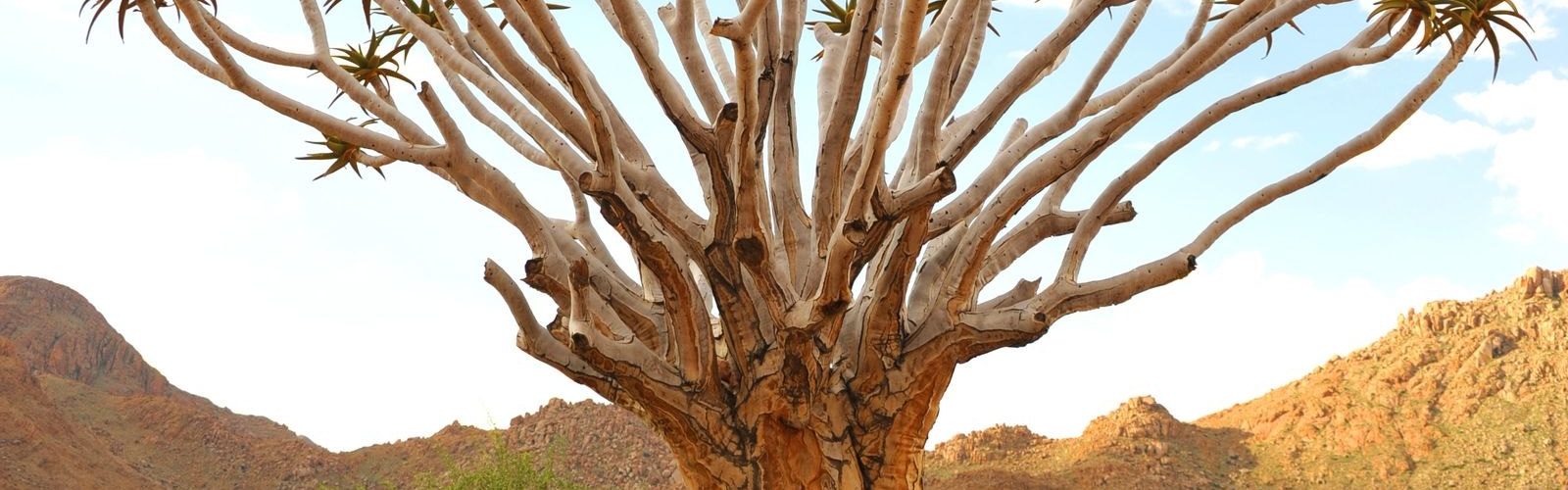
Baobab country burns. These trees grow on savannas that are dry for most of the year and catch fire often, and the trunk is the part that takes it. The bark is thick, fibrous, hard to set alight. A baobab past about fifteen years has bark thick enough to take most savanna fires. Younger ones burn back to the ground and resprout.
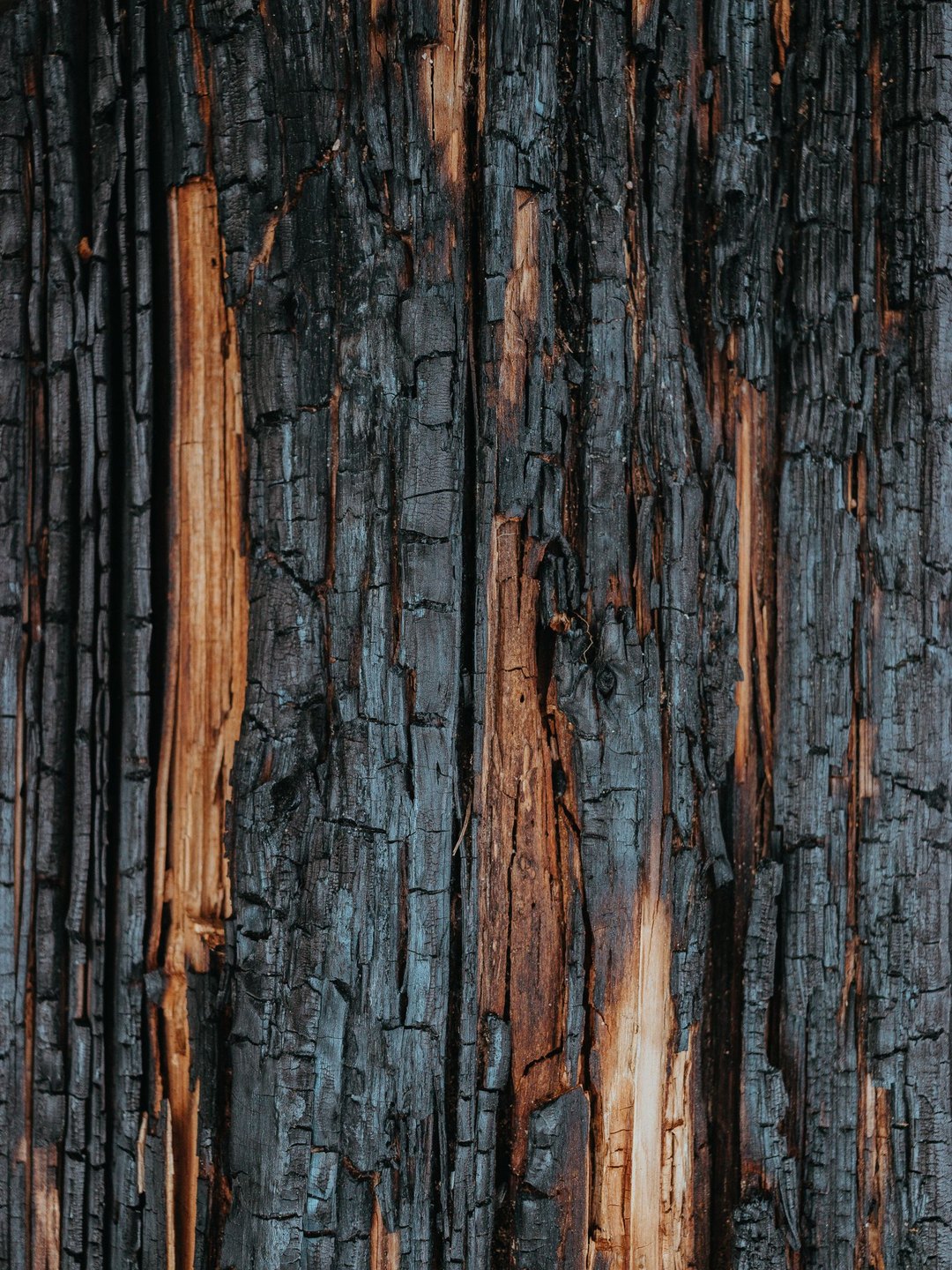
What the fire leaves is not cosmetic. Where the bark burns away, the regrowth comes back thicker and lumpier, and after enough fires the surface stops being smooth at all and starts to resemble elephant skin. On an old baobab the scars cover most of what you can see. We have written about that repair before; this is it at the scale of a body.
Radiocarbon dating of one giant South African baobab found six separate new layers of wood inside its internal cavities, each grown after a major fire. The most recent dates to 1990, when workers on the farm lit a fire to smoke a pair of black mambas out of the hollow, lost control of it, and burned the interior badly. The tree answered by growing another skin over the burn.
That is not resilience the way we usually tell it. Nothing was put back. The burned wood is still burned; the tree laid new wood on the far side and stopped treating the inside as a place to keep working.
What we do with ours
We handle our own scars the other way, most of the time. We pick at them. A remark from years ago gets replayed on a walk home. A failure gets reopened to check whether it still hurts, as though checking were the same as healing.
The tree’s method is less flattering and probably more useful. It does not restore anything. It decides that a piece of itself is finished, walls that piece off, and grows outward from there. The damaged part gets filed under the past and given a boundary, and the boundary holds even when the wood behind it rots.
We are not going to pretend this is a lesson about gratitude. Nobody chooses the fire, and plenty of trees die of exactly the wounds they are supposed to survive. What the baobab has is a strategy, not a virtue. It is available to us too: stop cutting into the same wound.
There is a reason we don’t. A closed wound stops producing information. As long as we keep it open, it can still tell us something about what we should have done, and that feels like progress. The tree gave up that feeling early. It kept the scar and lost the argument.
A practice for the week
Pick one thing you keep reopening. Not the largest thing in your life, since those close on their own schedule. The one you return to most often. A conversation you rehearse, or a person you have already explained yourself to twice.
Then do the tree’s small violence and call it closed. Not resolved. Not forgiven, if it isn’t. Closed. Write the date down if that helps, because a wall with a date on it is easier to trust than a feeling.
Expect the wood underneath to still be there. It will be there. The point was never to remove it, only to stop letting it be the place where you keep growing.
What is still open in you that you have mistaken for unfinished business?
The Eye watches. The Tree stands. The Delve awaits.