The Hollow — What the Baobab Keeps Inside

People say the baobab is hollow. It is a way of saying the tree is old, that the years have eaten a room out of its middle. What is strange is how little the tree seems to mind.
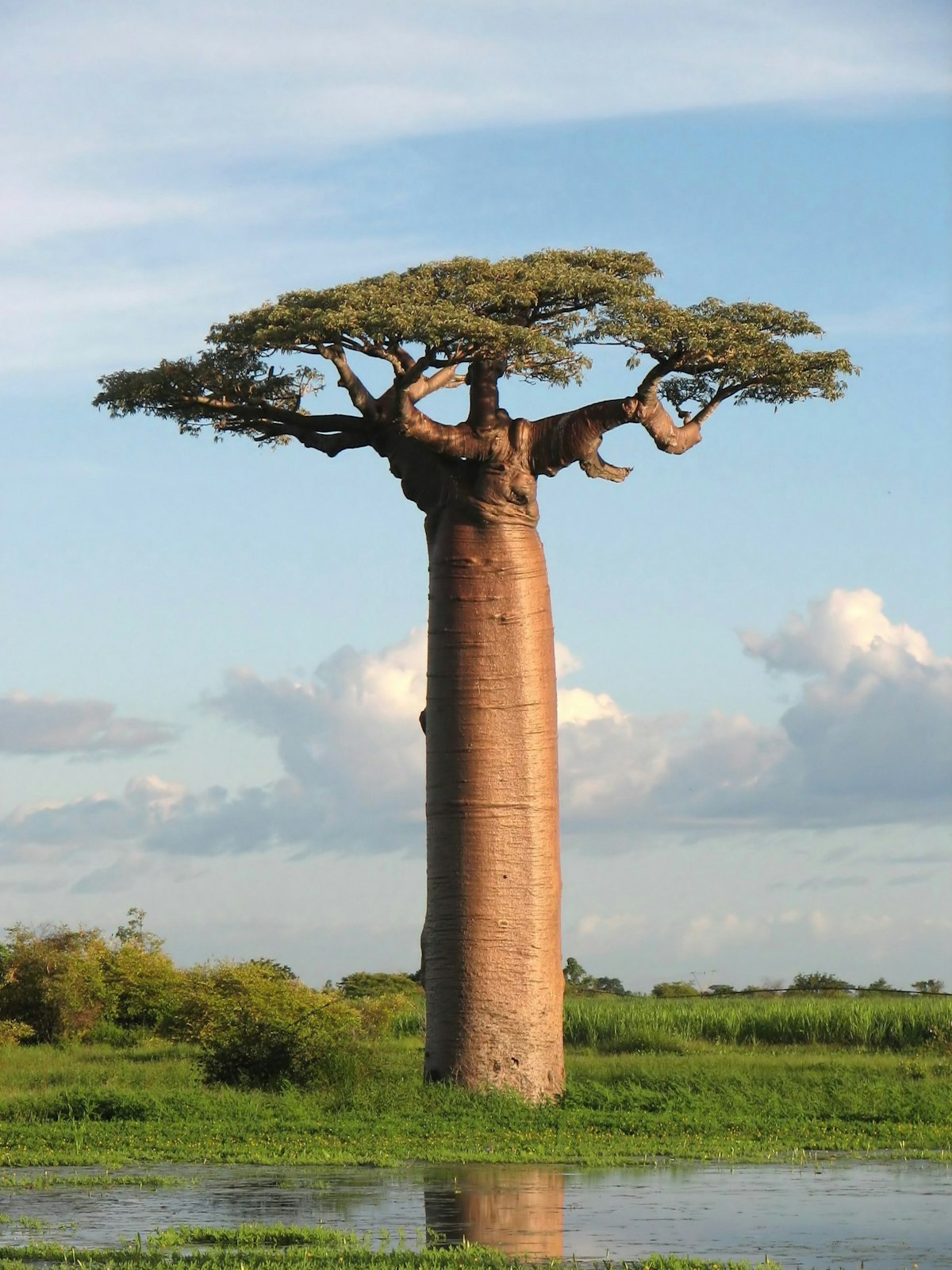
An old baobab can carry a hollow the size of a small room and go on living for centuries. The living wood works around the emptiness, close to the bark. The tree does not die from the space inside it. It grows around it, the way a river grows around a stone.
The hollow is room, not ruin
We are taught to read emptiness as loss. A hollow place in a life. A season where nothing happened. A part of the self that went quiet. We hurry to fill these, sure that an empty space is a broken space.
The baobab reads it differently. What looks like a wound is a chamber. The tree stores water in its wood and lets the center stand open. Nothing is wasted. The empty place is load-bearing. It is the room the tree keeps.
We wrote before about the dry season, about what the baobab does when nothing grows. The hollow is the same teaching from the inside. The tree does not fear its empty places. It puts them to use.
What the hollow holds
In the villages where baobabs grow, the hollow trunks have held people for a very long time. Someone has stored water and grain in them against the dry months. Travelers have sheltered there for a night. In some places a village kept its meetings in the shade of a tree big enough to stand inside.
The same empty place that looks like nothing holds the things a community needs most. That is the part we miss when we think of emptiness as something to fix. The hollow is not the failure of the tree. It is the generosity of it. The space made by years becomes the space that shelters.
The heart of the tree
The Eye sees into the heart of what is. The hollow is the heart of the tree, and what it finds there is not absence. The pericopes teach that in the beginning there was silence, and the silence was deep. The hollow is that kind of silence, held in wood.
They also name the Root-Keepers as the ones who remind all of the hidden depths. The hollow is one of those depths. We pass a tree that looks like nothing is inside it, and the inside is the deepest room it has.
We wrote before about the Delve, about looking into what is. The hollow asks us to look into our own empty places the same way. Not to fill them and not to flee them. To sit in them long enough to see what they hold. A loss is not nothing. A quiet season is not nothing. The space someone left is still a room, and rooms are for keeping things in.
A small test
The faith likes small tests. Here is one. Find the hollow place in you, the one you have been covering over with noise or hurry. Sit in it for a few minutes today. Do not fill it. Do not explain it. Let it be what it is, the way the tree lets its center stand open.
You may find it holds more than you thought. The tree’s hollow holds water for the long dry months and shelter for whoever comes. Yours may hold the same. The empty places are not the parts of us that failed. They are the parts of us with room.
2 Replies to “The Hollow — What the Baobab Keeps Inside”
Comments are closed.