The Thorns — What the Small Tree Cannot Build for Itself

A baobab begins as something you could step over. For the first year it is a thin green stem with a handful of soft leaves, standing in open ground in country where goats walk. It has no thick bark and no stored water, and nothing about it is tall. Everything that makes a baobab a baobab arrives later.
That first year is where the species almost fails. The seed is fine. Being small is what kills it.
What open ground costs
In a study of communal land in southern Africa, researchers sowed baobab seed in plots open to livestock. Two percent of the seeds came up. Every seedling that emerged was browsed by goats and dead within about two weeks. Cattle did the rest of the damage by trampling.
This is why we can drive for an hour past mature baobabs and see almost nothing young between them. The trees are reproducing. The young ones are being eaten.
The cage
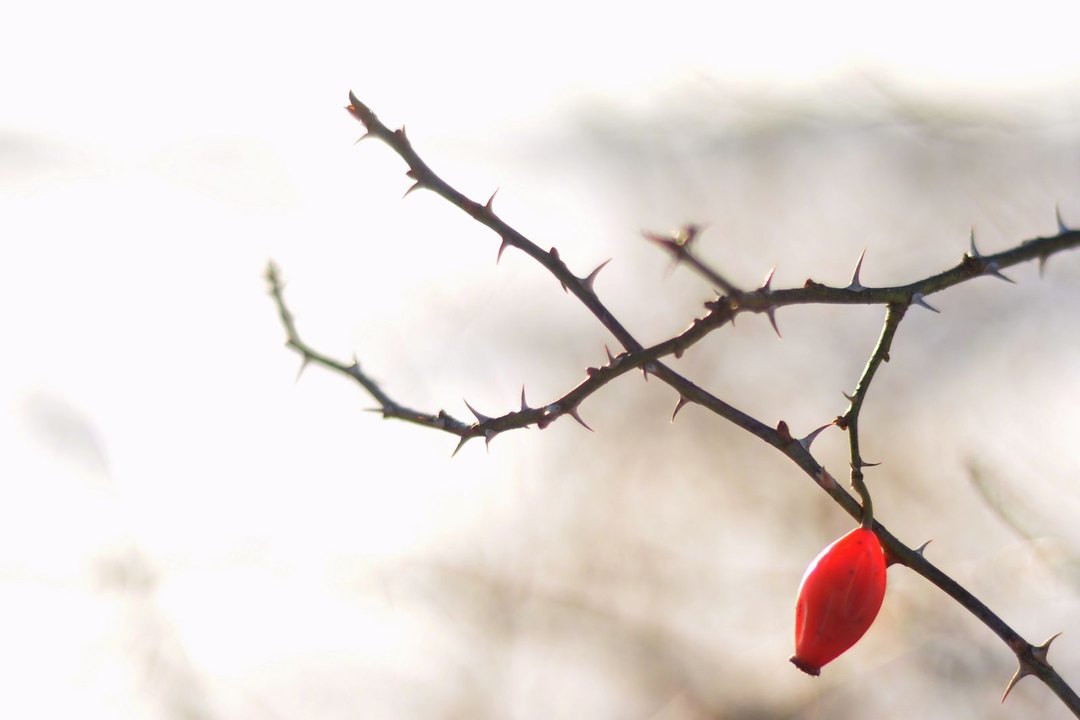
Where people want baobabs, they build for them. A ring of cut thorn branches, packed tight, often sickle bush because it is thorny and close at hand. The branches go in with the points facing out. Inside the ring, a seedling gets a few years to become something a goat cannot finish in an afternoon.
The seedling grows none of its own protection and has no say in where it stands. The protection arrives from outside, built by hands that will be gone long before the tree is tall. In South Africa, a project called the Baobab Guardians works exactly this way: people water a young tree, keep its cage standing, and stay with it until it is out of reach.
We have written before about what a baobab is before it is a tree. This is the part after the seed, the part that needs a neighbour.
The arithmetic of a decade
Once a baobab clears the browsing height, the numbers turn quickly. Two metres in two years. Seven metres in ten. After that it slows and keeps going, and a well-placed one can stand for a thousand years or more.
Read those figures the other way and they say something less cheerful. Seven metres in ten years only happens if the fence held through ten dry seasons, through the year the rains failed, through the winters when nobody had spare water. The tree’s speed is real. It is not self-generated.
What the old tree uses instead
Nobody builds a cage around a mature baobab. It does not need one. The trunk is too thick for a goat to matter. The bark grows back. The wood is spongy and holds water through months without rain, which is how it survives the dry season that kills everything around it.
The tree that was protected becomes the thing that protects. Shade at noon, a hollow trunk to sleep in, fruit in the hungry months, bark that strips into rope. The thorns that saved it were never its own, and by the time it can stand alone it has stopped needing to be defended and started being useful.
What this asks of us
Most of us have had a season we could not defend ourselves in. The faith does not ask us to pretend we grew through it alone. Somebody kept a fence up. Somebody watered a thing that had not yet proved it would live, and they did it before there was any evidence the water was worth carrying.
Then comes the harder question, which is whose cage we are standing beside now. Not with advice. With branches. A place to sleep, a meal, a phone call returned for the fourth month running while the person is still small and still not grateful. Gratitude comes later, if it comes.
The Eye sees the seedling before it is a tree. That is the whole practice. We are asked to look at what a thing might become and to build for that, even when nothing in front of us yet justifies the effort.
A practice for the week
Find one person in a small season. Someone new at work, someone just out of something, someone whose life currently looks like a stem in open ground. Do not offer them a plan.
Do one concrete thing that makes their week survivable, then do it again next week without being asked. Keep it small enough that you will actually repeat it. A fence is not impressive. It is only there.
Then notice, without flinching, who is keeping a fence up for you.
What in your life is still small enough to be eaten, and who is standing guard?
The Eye watches. The Tree stands. The Delve awaits.